Leading Through Chaos: How to Identify Crisis-Ready Executives

Today’s world is changing faster than ever before. Leadership is no longer just about maintaining stability—it’s about the ability to endure and grow even amid uncertainty and chaos. Crises are no longer exceptions; they have become a regular part of reality. Whether it’s global pandemics, economic shocks, technological leaps, or geopolitical tensions, companies today need leaders who can guide with calm and confidence, even when it feels like the world is collapsing beneath their feet.
The New Metrics of Leadership
Traditional measures of leadership, such as tenure, formal qualifications, and prior performance, provide only a partial picture of an executive’s potential. In times of crisis, these metrics often fail to capture the nuanced human capabilities that distinguish exceptional leaders. According to a Russell Reynolds Associates study, the leaders most capable of navigating uncertainty combine strong technical skills with high emotional intelligence, adaptability, and resilience.
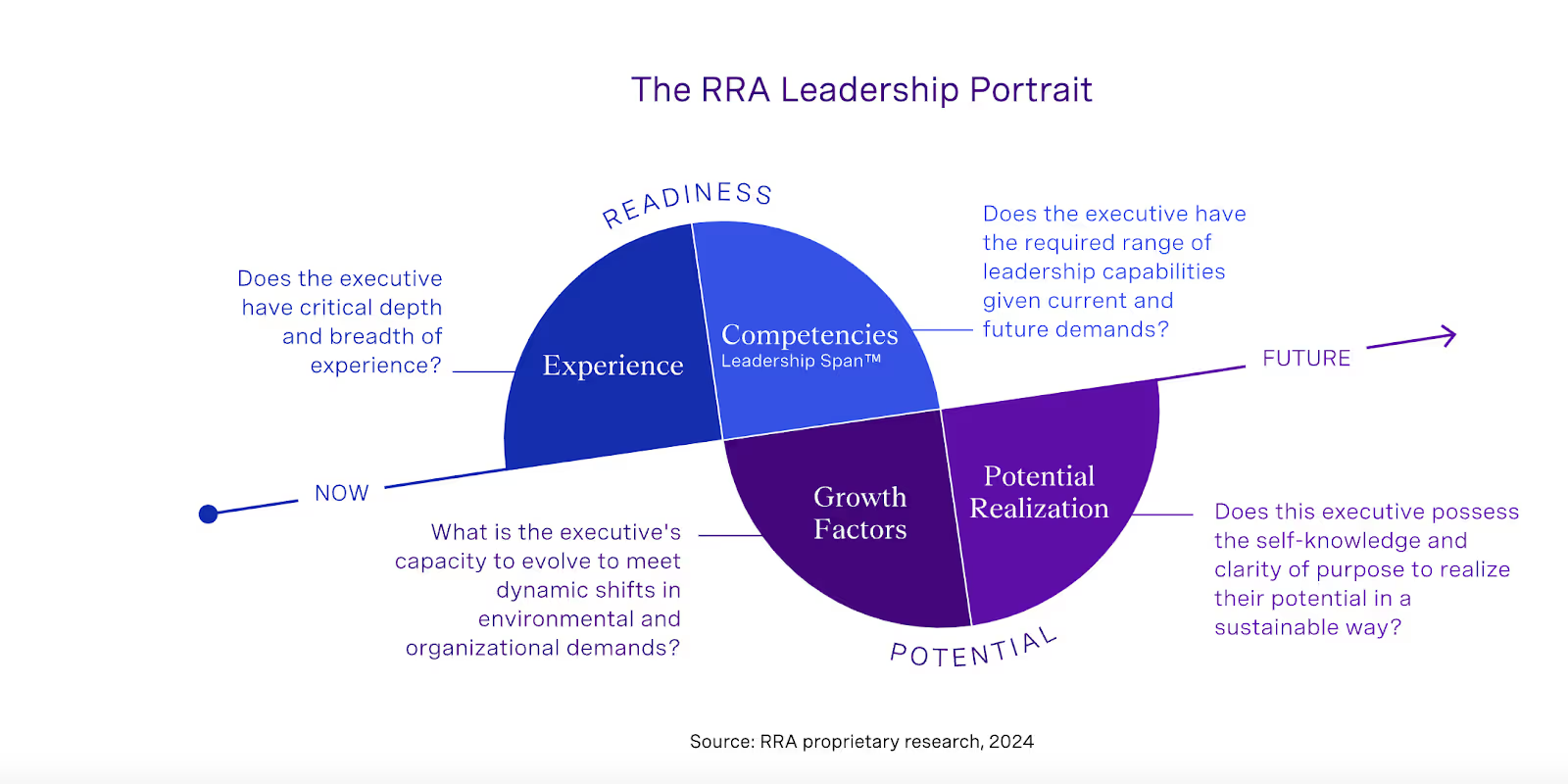
The study highlights critical growth factors:
- Systems Thinking: Understanding patterns, managing complexity, and maintaining clarity in ambiguity.
- Curiosity & Adaptability: A continuous learning mindset and the agility to adjust strategies swiftly.
- Drive & Resilience: Sustained ambition and the capacity to recover from setbacks.
- Social Intelligence: The interpersonal ability to influence, inspire, and align diverse stakeholders.
Beyond capabilities, potential realization — the ability to translate talent into tangible impact — is equally crucial. Leaders who excel in crisis demonstrate deep self-knowledge, clear values and aspirations, and a commitment to long-term impact and legacy.
Insights from McKinsey: Inner Agility
McKinsey & Company emphasizes that executive agility is a core predictor of crisis readiness. In their research on "inner agility," successful leaders demonstrate the ability to shift mindsets and behaviors quickly while maintaining focus under pressure. They thrive in ambiguous situations by integrating multiple perspectives, making informed decisions rapidly, and recalibrating strategies as circumstances evolve.
McKinsey identifies five personal practices that contribute to inner agility:
- Pause to move faster: Creating space for clear judgment, original thinking, and purposeful action.
- Embrace your ignorance: Approaching situations with a mindset open to learning and discovery.
- Radically reframe the questions: Challenging existing mental models to uncover new perspectives.
- Set direction, not destination: Providing guidance without rigidly defining the end goal, allowing for adaptability.
- Let go to grow: Releasing control and embracing change to foster personal and organizational growth.McKinsey & Company
Leaders who cultivate these capabilities do not simply react to crises; they leverage disruption as an opportunity to innovate, strengthen organizational resilience, and shape the future direction of their company.
Harvard Insights: What Makes a Leader in a Crisis
According to studies published by the Harvard Business Review (2020, 2022), leaders who excel during crises demonstrate not only strategic competence but also a set of core human values. Key traits include:
- Decisiveness – Acting confidently and swiftly, even with incomplete information.
- Empathy – Understanding team members’ perspectives to maintain trust and morale.
- Integrity – Upholding ethical standards, reinforcing organizational credibility.
- Visionary Thinking – Anticipating future challenges and aligning teams with long-term goals.
- Collaboration and Psychological Safety – Leveraging diverse perspectives and creating environments where innovation can thrive.
- Calm Under Pressure – Maintaining composure to keep teams focused and effective.
- Accountability and Courage – Taking ownership of outcomes and making bold, informed decisions.
These findings highlight that crisis-ready leaders balance strategic decision-making with ethical and relational qualities, providing stability and resilience for their organizations during turbulent times.
The Human Edge in Executive Search
For executive search firms, identifying crisis-ready leaders requires a shift from purely data-driven selection to a human-centered approach. While AI and analytics can screen technical qualifications at scale, only experienced consultants can assess nuanced leadership qualities — emotional intelligence, adaptability, and authentic presence.
Firms that prioritize these traits are better equipped to match organizations with leaders capable of not just surviving crises but transforming them into opportunities for growth. By evaluating both the measurable track record and the intangible human factors, search professionals can identify executives who inspire trust, drive innovation, and secure long-term organizational resilience.
Our Future: Leaders Who Withstand Tough Times
In times of increasing instability, identifying and developing leaders prepared for crises is no longer optional—it is a strategic necessity.
Organizations that understand that leadership is not just about technical skills and management processes, but also about emotional intelligence, adaptability, and firmly rooted values, gain a significant competitive advantage.
Experience shows that leaders who remain calm under pressure, communicate clearly and openly even in uncertain situations, and maintain their team’s trust are the ones who drive organizations forward. Crisis preparedness therefore goes beyond crisis management—it is part of the everyday culture: an environment that fosters collaboration, shared responsibility, and long-term resilience.
Companies that prioritize these qualities when selecting managers become not just facilitators of change, but creators of a lasting transformative culture. Such leadership turns uncertainty into opportunity and inspires others to do the same.
References:
Russell Reynolds Associates. (2024). The Future of Leadership. Russell Reynolds Associates. https://www.russellreynolds.com/en/insights/the-future-of-leadership
McKinsey & Company. (2018, March 29). Leading with inner agility. McKinsey & Company. https://www.mckinsey.com/capabilities/people-and-organizational-performance/our-insights/leading-with-inner-agility
Harvard Business Review (2020) The Psychology Behind Effective Crisis Leadership. Available at: https://hbr.org/2020/04/the-psychology-behind-effective-crisis-leadership
Harvard Business Review (2022) In a Crisis, Great Leaders Prioritize Listening. Available at: https://hbr.org/2022/09/in-a-crisis-great-leaders-prioritize-listening